According to the Small Business Administration, there are 300 million companies in the world today and more than 600,000 new businesses opening each year in the US. Which means more competition and fewer brand names to choose from. In addition, many business owners make the mistake of choosing descriptive names or name their brand based on emotions or sentimental meaning. I'm not saying you shouldn't do this, but if you want to attract attention in today's world, you'll need to be more thoughtful.
The brand name has fundamentally one goal: to be memorable. This means a strategic, distinctive, and easy to remember name. A short and catchy name helps but is not a requirement. With that said, let’s take a look at the strategic process that many of the most famous businesses use to create a memorable brand name.
#1 Know Your Buyer
Knowing your customer is the first step in this process and the most important one. Start by creating a buyer persona. It’s the visualization and profile of a "person" that represents your ideal customer. Hone in on a specific person and include information such as their demographics, behaviors, goals, challenges, interests, and more. Let’s take IKEA as an example and assume one of their their buyer personas looks something like this:
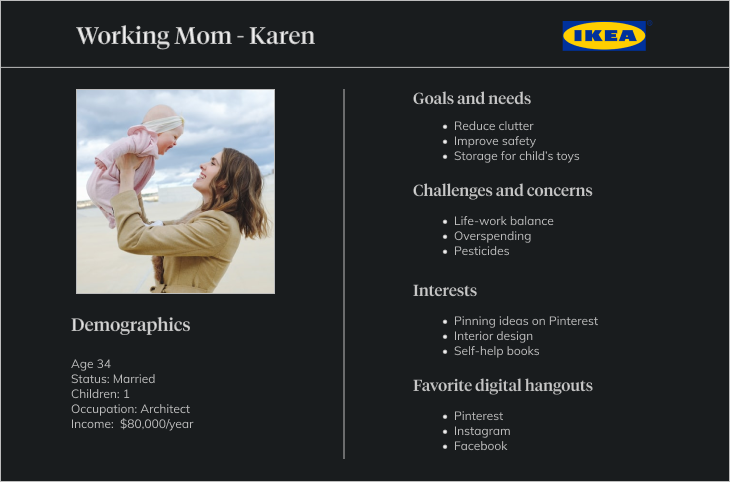
Of course, this is a simplified IKEA buyer persona, and I’m sure they have many more data points. However, the key here is to put yourself in your buyer’s shoes. The more details you can collect, the more relevant keywords might appear.
#2 Define Your Differentiator
Your brand position is your differentiator, it’s what makes your brand distinct from the competition and tells your audience why they should buy from you.

Tesla is a great example of strong brand positioning. They clearly differentiate themselves from gas-powered and electric vehicles by being luxurious, long-range, eco-friendly, and of course, electric. Be clear on what position you want to own in the mind of your audience. It will form the foundation of what your brand name should be based on. Look out for keywords here.
#3 Find Associated Keywords
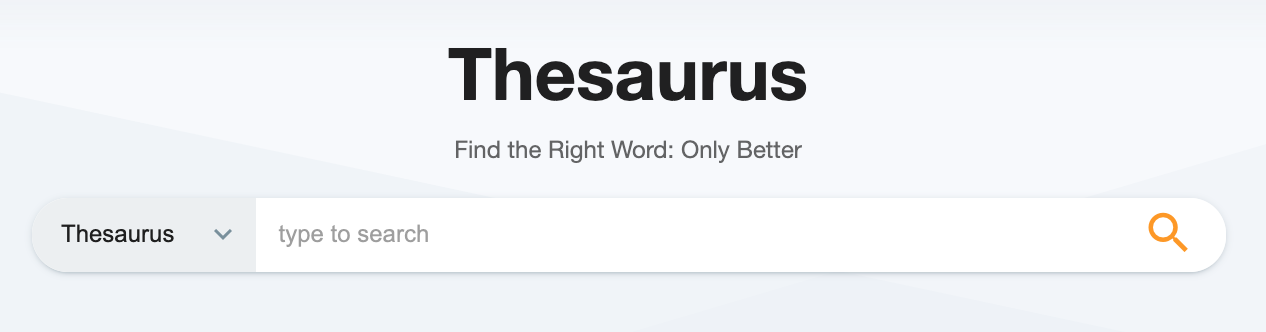
Once you've gathered relevant keywords from your buyer persona and your brand differentiator, use them find associated words and synonyms. Go crazy on Thesaurus.com. The purpose of this step is to exhaust every single naming idea possible with relevant keywords.
#4 Experiment

This stage involves a heavy dose of creativity and will also depend on the kind of business you have. Sometimes a name will jump out at you when you have a pile of keywords in front of you, but that’s not always the case. You could be sitting there for hours or days.
For startups, misspelling words might do the trick, take Lyft and Flickr. But a naming strategy like this won't work well for businesses that want to convey seriousness and competency, like law firms.
The more time you invest in this stage, the greater the chances are of discovering something truly memorable. Get creative, merge words, chop words up, change the spelling, use analogies or metaphors. You can also use business name generators like Namelix to get more ideas.
#5 Play Devil’s Advocate
.jpg)
By now you probably have a stack of keywords and it’s time to put them to the test. Here you have to play devil’s advocate. Go through a quality check and ask the questions: “is it memorable?”, “is it distinctive?”, “is it concise?”, “will I want to change it in 5 or 10 years?" If a name passes this filter and ticks all the boxes, then you’re well on your way.
#6 Check Availability
.jpg)
This step can sometimes be heart-wrenching. You’ve put so much time and effort to create a memorable name and then you go on google and realize that somebody has it. If you’ve followed the steps above, you’ll have more than one name to place your bets on.
Do a search on the US Trademark Database and check with other countries as well – as they also have their own trademark databases. And if the URL is already taken, then get creative. It doesn’t have to be exactly the name of your brand or a .com domain extension.
Conclusion
Naming a brand can be a daunting task. It might be tempting to make an important decision like this based on emotions. But in reality, the naming process requires a rational and strategic approach.
Choosing a brand name is like marriage. Once you choose one, it's very difficult to change it. So make sure you take the time to go through these steps and create a memorable brand name that you can be proud of.
And remember, the brand name is just one of the elements that you’ll need for a cohesive and powerful brand. In later articles I’ll talk about the importance of brand strategies, taglines, positioning, brand visuals, and much more.